

UR10e
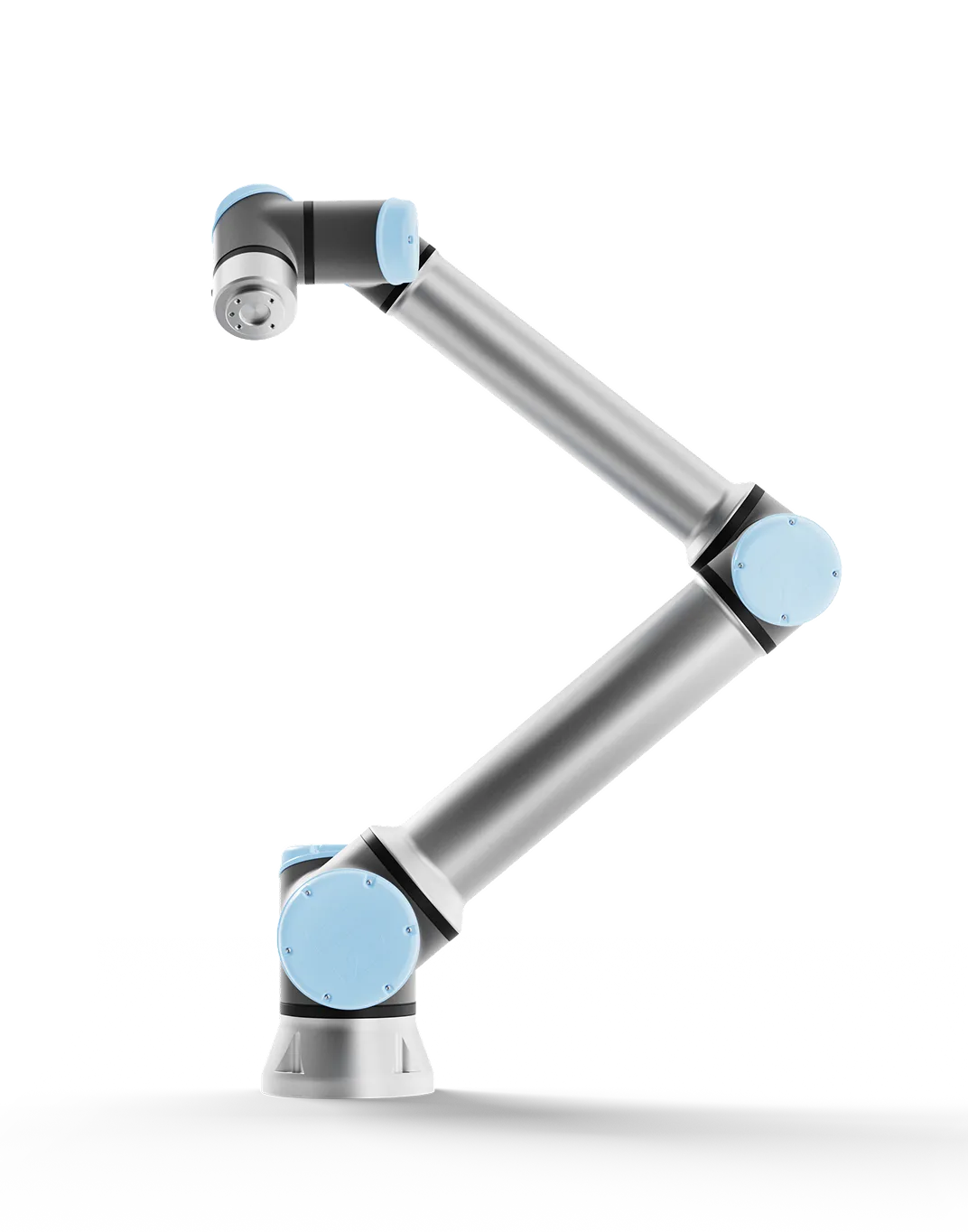


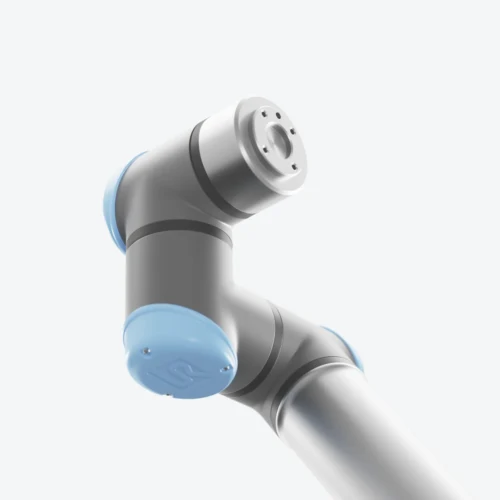

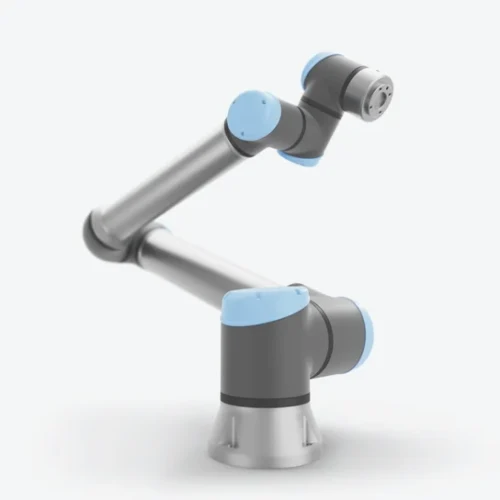
Collaborative Robot UR12e
The UR12e is a highly versatile collaborative robot. With its optimal combination of payload, reach, and compact design, the UR12e easily adapts to a wide range of workstations. It seamlessly integrates with the extensive ecosystem of UR+ components and kits.
In industrial environments, the UR12e streamlines everyday tasks such as palletizing, machine tending, and welding, while also inspiring innovative applications in areas like recycling, glass manufacturing, and automated vehicle refueling.
The UR12e also excels in academic and research settings. Its open software architecture, compatibility with sensors, cameras, and tools, and intuitive programming interface make it an ideal platform for experiments in robotics, automation, mechatronics, and artificial intelligence.
Along with the UR12e robot arm, we supply a control box, a control panel (teach pendant, optionally with 3PE), a power cable, a cable connecting the arm to the control box, and full technical documentation.
SEND INQUIRY DOWNLOAD SPECIFICATION
INQUIRY
UR12e collaborative robot for teaching, research and laboratory automation
The Universal Robots UR12e is a versatile collaborative robot that can serve as the central component of a modern automation and robotics laboratory. Its combination of a 12.5 kg payload, 1300 mm reach and compact footprint makes it suitable for both individual teaching stations and more advanced research platforms.
Together with the UR12e robot arm, we provide a control box, a teach pendant (optionally the 3PE version), a power cable, a cable connecting the arm to the control box, and full documentation. The teach pendant comes with PolyScope software, which serves as an intuitive user interface for programming, configuring, and operating the cobot. It enables easy creation of motion sequences, program execution, tool calibration, and real-time robot monitoring.
Control Box
The control box serves as the central management module of the robot system. It is responsible for power supply, signal processing, safety functions, and communication with both the teach pendant and the robot arm. It ensures stable, efficient, and safe operation of the cobot under various environmental conditions.
Example Laboratory Exercises with UR12e:
Pick-and-place and gripper operation
Programming the picking, transferring, and placing of parts using electric or pneumatic grippers.Robot motion and coordinate system programming
Creating motion sequences, defining work points and reference frames, and configuring the TCP.Vision systems and object recognition
Locating, identifying, and sorting components based on camera data, and automatic robot position correction.Force control and environmental interaction
Executing tasks requiring controlled contact, applied force, or surface-following tool guidance.Design and integration of complete robotic workcells
Selecting the robot, tools, sensors, cameras, PLC, and peripherals, followed by programming, commissioning, and system performance analysis.Collaborative application safety
Configuring workspace, speed, and force limits, and analyzing robot behavior in the vicinity of an operator.Payload and center of gravity analysis
Assessing the impact of tool mass, part weight, and the center of gravity on robot operation.
Built-in safety technologies, including force and collision detection features, are a key component of the UR12e platform. However, in a practical setup, the ability to operate without additional safety fencing depends on the configuration of the entire system and the risk assessment performed.
What tasks can the UR12e collaborative robot perform?
The most common applications for this type of robot include material processing, palletizing, assembly, welding, and quality inspection. In addition, thanks to its user-friendly software, the robot can be programmed to perform tasks that best meet the user’s needs.
Is the robot safe for work with students?
Yes. All Universal Robots robots are certified to applicable safety standards, including ISO 10218-1 and ISO 13849-1, and are suitable for both industrial applications and educational use at universities. *Risk assesment of the work station provides safe working environment.
Does UR12e comes with accesories?
No, the provided set includes: UR16e robotic arm, a control box, a teach pendant (3PE is optional), a power cable and a cable between the arm and the control box, as well as full technical documentation.