

Ouster OS1Rev8
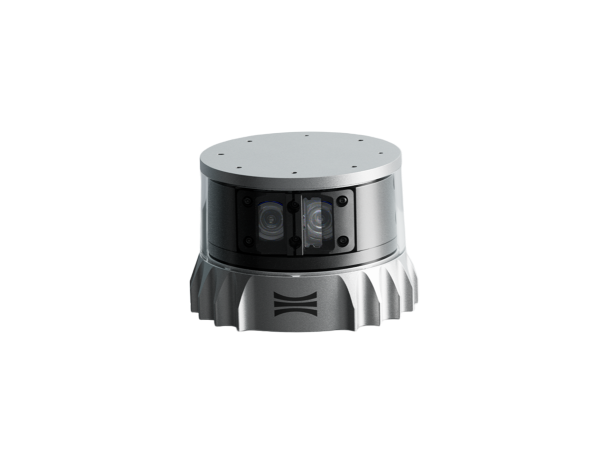
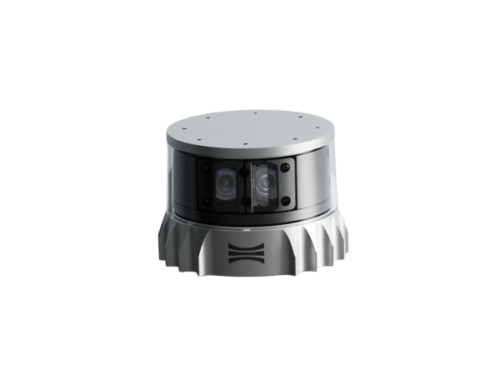
Ouster OS1 Rev8 LiDAR
A mid-range LiDAR sensor designed to provide an optimal balance between resolution and detection range. With a range of up to 90 m at 10% reflectivity, a maximum range of 250 m, and a minimum range of 0.0 m, it delivers reliable environmental perception for a wide range of research, development, and deployment scenarios.
Featuring a 45° vertical field of view and a point cloud output of up to 10.4 million points per second, the sensor generates highly detailed 3D spatial data, making it well suited for security systems, smart infrastructure, autonomous vehicles, and advanced robotics applications.
The sensor also provides real-time hardware-level visualization of a colorized 3D point cloud without requiring additional vision sensors or external calibration, simplifying system integration while enabling accurate colour-aware perception.
SEND INQUIRY DOWNLOAD SPECIFICATION
INQUIRY
The Rev8 series has been engineered for reliable operation in real-world environments and demanding deployment scenarios. Every sensor is built to meet rigorous automotive-grade standards, ensuring long-term performance, durability, and reliability.
Designed for use in harsh conditions, each sensor operates across an extended temperature range from –40°C to 85°C, withstands mechanical shocks of up to 100 G and vibrations of up to 10 Grms, and features an IP69K protection rating. These characteristics enable continuous and dependable operation in autonomous systems, intelligent infrastructure, industrial automation, and other mission-critical applications.
| OS1 Rev8 Technical Parameter | Value |
|---|---|
| Range @ 10% Reflectivity | 90 m |
| Maximum Range | 250 m |
| Minimum Range | 0 m |
| Vertical FoV | 45° |
| Point Cloud Output Rate | 10.4 million pts/s |